


Days 6 -10 - Land of the Midnight Sun

Day 6 thru 10 – Land of the Midnight Sun
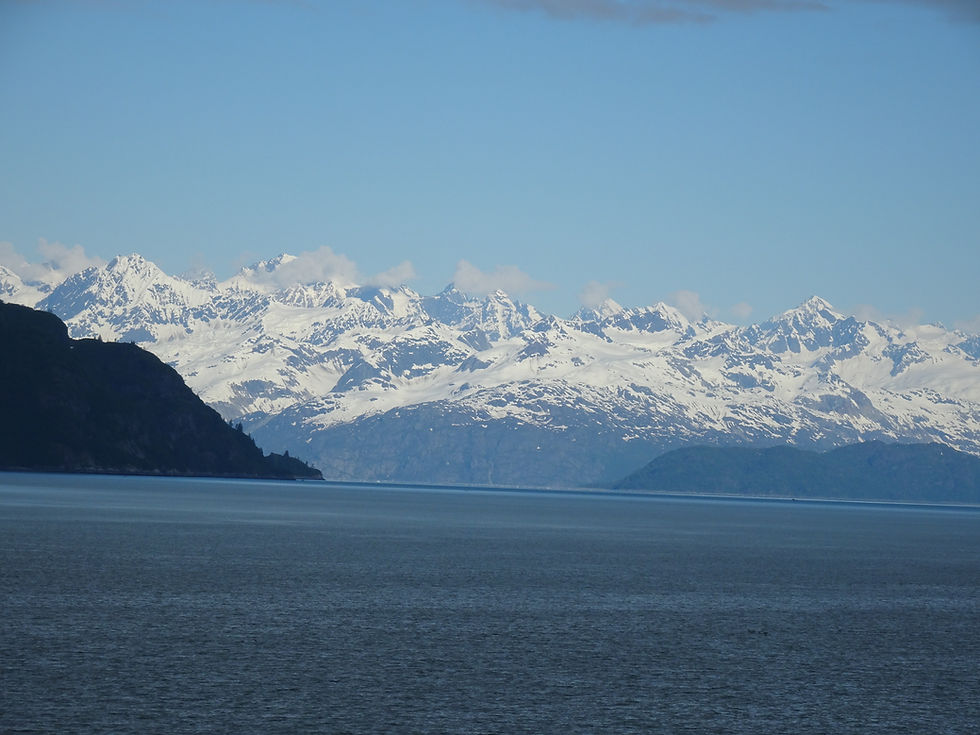
After leaving Glacier Bay, we headed out to open waters and sailed toward our final port, Whittier, Alaska. We’d been at sea for 7 days and traveled about 1300 nautical miles. The plan for the rest of the trip is to disembark at Whittier, Alaska and board the McKinley Express bound for Denali National Park, then travel to Fairbanks and home.
The McKinley Express is a privately-owned train operated by Holland America. It features glass-domed rail cars which offer spectacular views of the Alaskan interior. The lower level is a dining car where lunch (and optionally, breakfast) was served. We are both very fond of trains and this one was beautiful and comfortable. We settled in for the 9-hour ride and watched the beautiful Alaskan interior unfold around us.

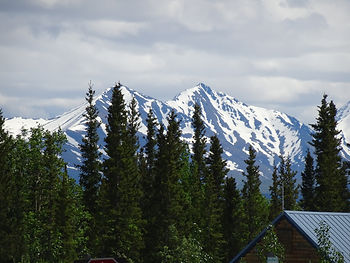
A guide narrated our trip with information and stories about the areas as they passed by, and she alerted us to wildlife spottings along the way. The interior of Alaska is more beautiful mountains rising above a lush, green landscape, dotted with wildflowers and the occasional Rhododendron. This was surprising to me because I falsely assumed that the shortened number of days in an Alaskan summer would severly limit the growth of plants. The truth is that the long hours of sunlight in an Alaskan day more than compensate for the shorter number of days. In reality, the plants grow quicky and are very lush. The common dandelion, for instance, which grows everywhere in North America, grows 18 to 24 inches tall in Alaska with blooms about 2” in diameter. They are a favorite food source for local bears, and can be seen growning even on rooftops.


Along the train tracks, we see many rivers and streams, and some small outposts which function as tiny towns. Much of the area we pass through is part of Denali National Park. A few cabins are allowed to remain here, though much of the park is designated as protected wilderness, ensuring no premanent man-made structures can be built there. Life in this part of Alaska is very isolated and remote, but is nonetheless home to some of Alaska’s independent residents. We crossed the highest point of the Alaskan Railroad at 2363 feet above sealevel.

About 7:00, we arrive at the Denali Lodge, our home for the next couple of days. This sprawling complex of buildings is owned by Holland America and consists of a main lodge, a small cluster of shops, and 20 or so buildings, each housing about 20 hotel rooms. We stayed on the first floor of one of the buildings, and our deck looked out over a creek which babbled over large rocks. We had dinner at some of the shops, then went to bed. It had been a long day

The next day, we decided to cancel our scheduled outing, and instead opted to explore Denali on our own. We caught a tram to the visitor’s center and learned all about this incredible place. Denali is an enormous park with 6 million acres, half of which is designated wilderness. It is home to the Dall sheep, large white sheep with thick, curling horns. Their thick white coats made them prized targets for hunting, and Denali National Park was originally founded in 1915 to protect this rare species from overhunting. We were able to spot a small herd of these high on a mountain during our train ride.
Denali contains the highest peak in North America, Mt. Denali (originally Mt. McKinley, but renamed to its original Athabascan name). We weren’t able to see the top due to cloud cover, even though we visited on a beautiful, sunny day. This is often the case, we were told, but we did see some of the other enormously-impressive mountain peaks.
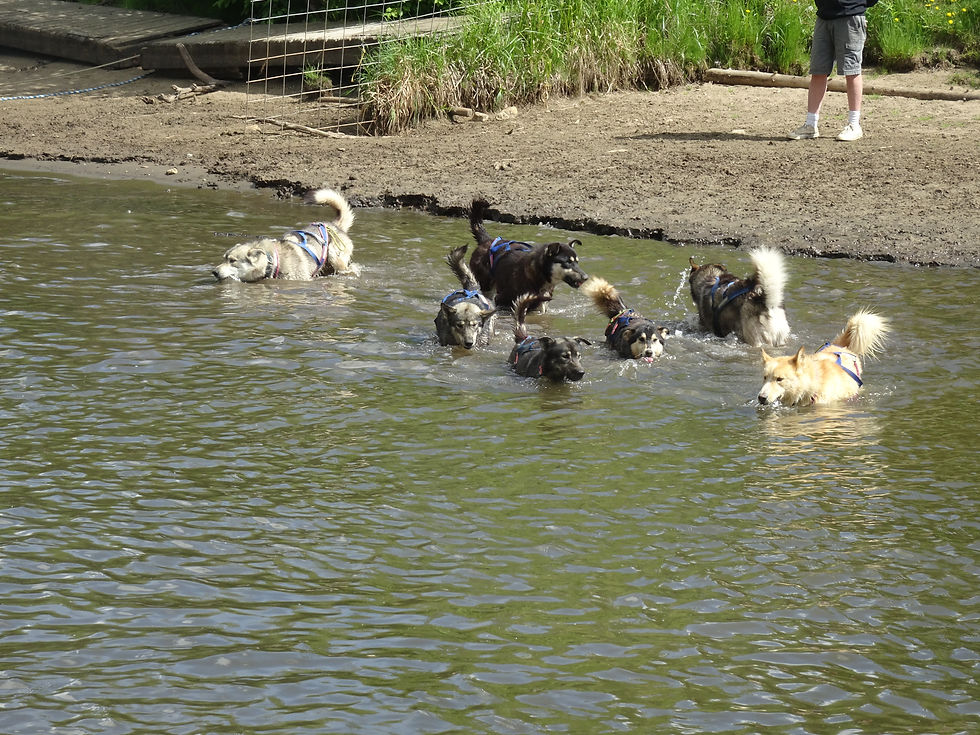
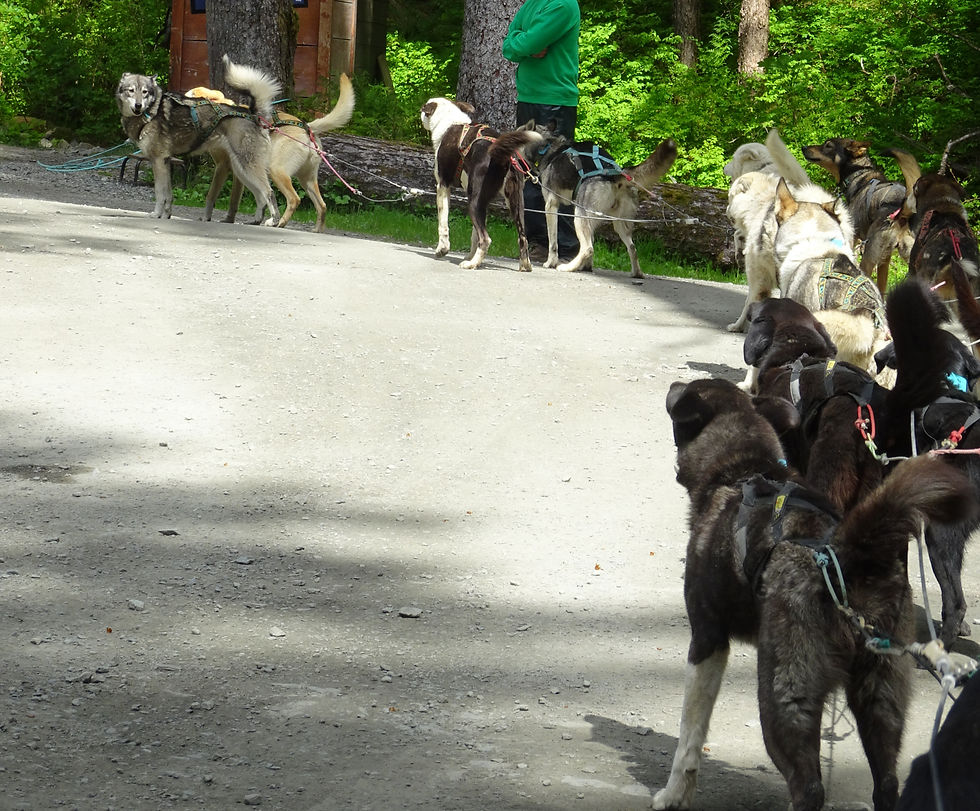
We caught a tram and visited the dogsled demonstration. These are working dogs, freight dogs they call them, and are different than the Iditarod dogs we saw in Juneau. Freight dogs are bred for strength and endurance, and they do much of the work of maintaining the park during the winter months. They are heavier and had thicker coats, particularly their tails. When they sleep on the trails, they curl up like foxes and the thick tail protects their eyes, nose and mouth from frost-bite. The dogs are owned by the National Park service and are used instead of machinery to haul materials, supplies and people. Machines are not always reliable in the -40 degree temperatures, and the dogs do not contribute to the air and noise pollution of the pristene environment.


In the evening, we were treated to a dinner show featuring Alaskan salmon, brisket, biscuits, vegetables and apple cobbler, while being entertained with tales of some of the rauchous early inhabitants of Alaska, which boomed during the gold rush of 1890’s.
All of my life, I’ve heard of “The Land of the Midnight Sun”, and I was never quite sure what to think about it. Experiencing it first hand was quite amazing. When we arrived in Denali, it was the 14th of June, about a week before the summer solstice. So the hours of daylight were almost at a peak. The sun set at 12:10 am (after midnight) and rose again at 3:20 am, leaving just over 21 hours of daylight. When the sun set, it was just below the horizon and it never got really dark – I happened to awake about 2:00 am and looked outside and it was “twilight” – you could clearly see the trees and creek but the light was very soft, just like the early morning or twilight at home. For this reason, the hotels room had heavy, blackout curtains at all of the windows.
The next day, we headed for Fairbanks for our final day in Alaska and spotted a huge moose, standing in a pond having a long drink of water. Another unique sight was an area of burned-out forest. Forest fires are a natural part of the lifecycle of the wilderness, and there are trees, such as the black birch, which produce pinecones that will only open and spread their seeds at extremely high temperatures. What was unique to this burned out area, was the beautiful white flowers, called Fireweed, which naturally grow in the burned areas. They are often the first sign that life is returning to the burned area.

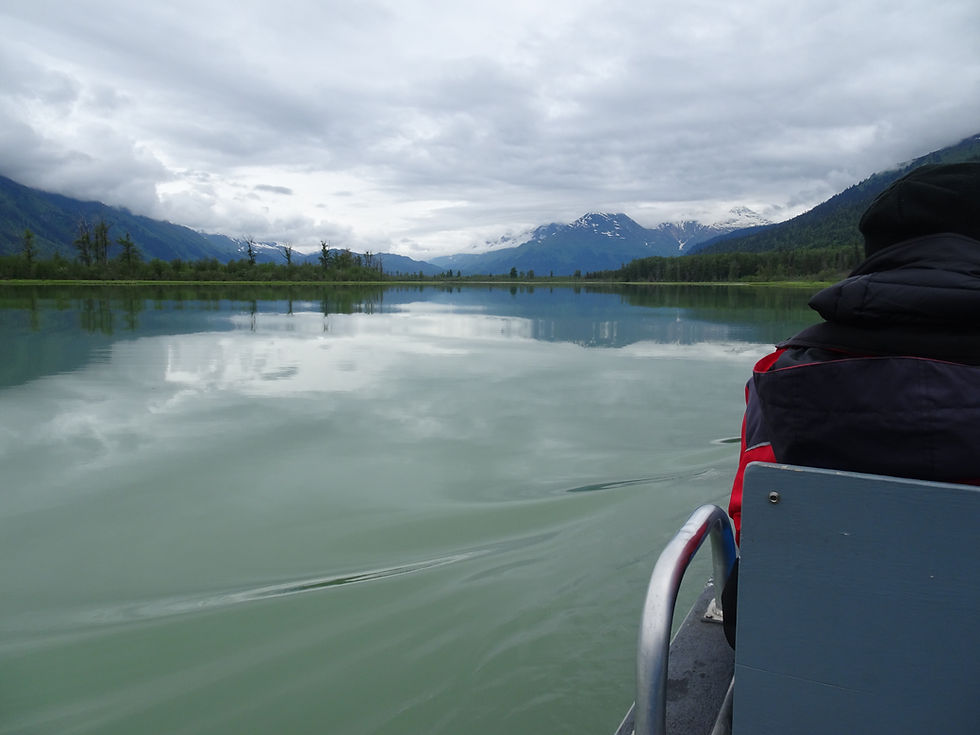
We were treated to a riverboat cruise for part of the trip aboard a beautiful stern-wheel riverboat. A seaplane did a demonstration for us and we learned that a lot of these are amphibious – they can attach floats, wheels or snowskis as the task demands.
Along the route, we made a stop at Susan Butcher’s dog camp. Susan was a famous Iditarod champion in the 1970’s, and her daughter and granddaughter now run her camp, maintaining the bloodline and training the next generations of champion sled-dogs.


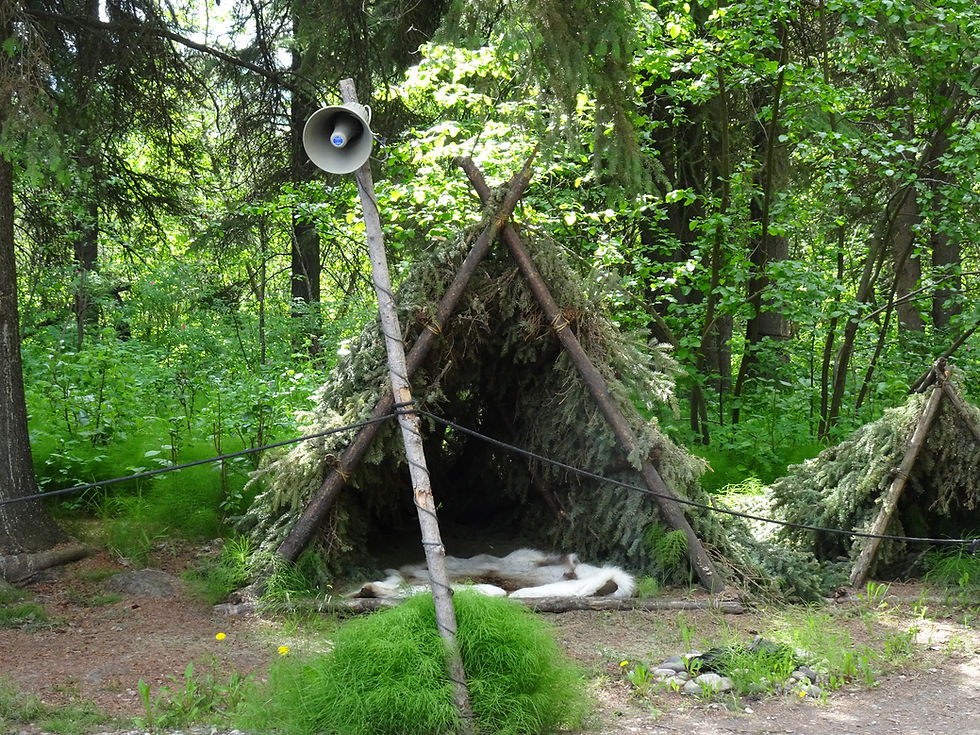
We also visited a replica camp depicting the life of the Athabascan people with narration by members of the tribe who lead modern lives but maintain their ties to their native culture. The domesticated reindeer were particularly beautiful.



We finally made it to our hotel in Fairbanks, had a nice dinner there, and then to bed. The next day we flew from Fairbanks to Seattle, then Seattle to Philadelphia, arriving at 5:35 am. An hour-long drive, breakfast at our local diner, and we fell into bed around 9:00 am.
Our trip to Alaska was truly unique – it is a beautiful, wild state of impressive mountains, pristene waterways and a unique culture. We will always treasures our memories.
Comments