


Day 2 - Ketchikan

June 9 – Ketchikan, Alaska

Back in the 90’s I was a huge fan of the show “Northern Exposure”. It followed the lives of the inhabitants of an eclectic Alaskan town. When we opened the blinds today, I had to just smile. The town of Ketchikan Alaska looked much like the town in the show - Simple small shops, lots of individual flair, nothing moving too fast. And surrounding this little town, the beautiful Tongass National Forest.
After breakfast, we left the ship and finally set foot on Alaskan soil. We walked around town, got some coffee from a small hut along the pier, then found the leader for our first event for the day “Saxman native village”.


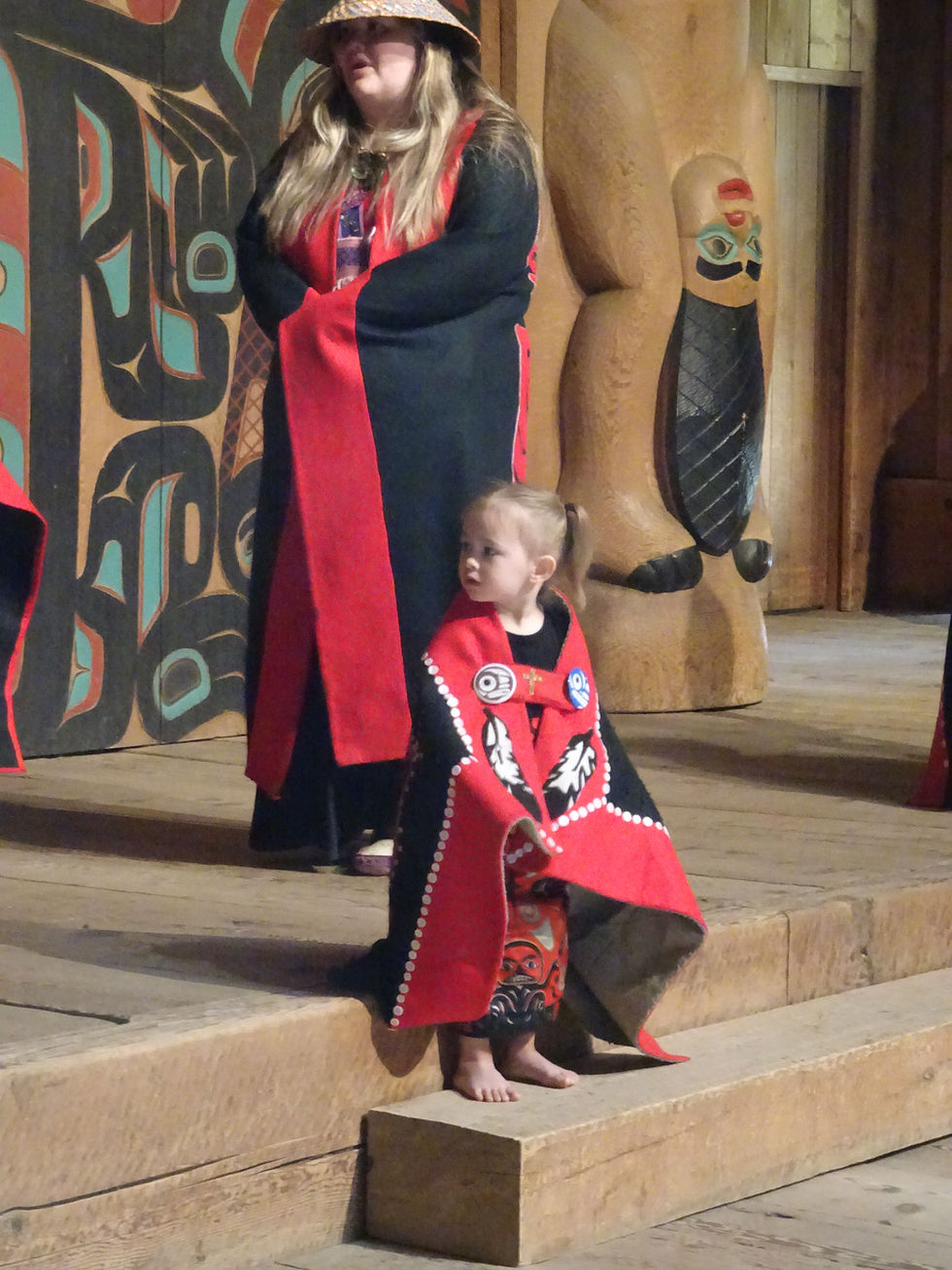
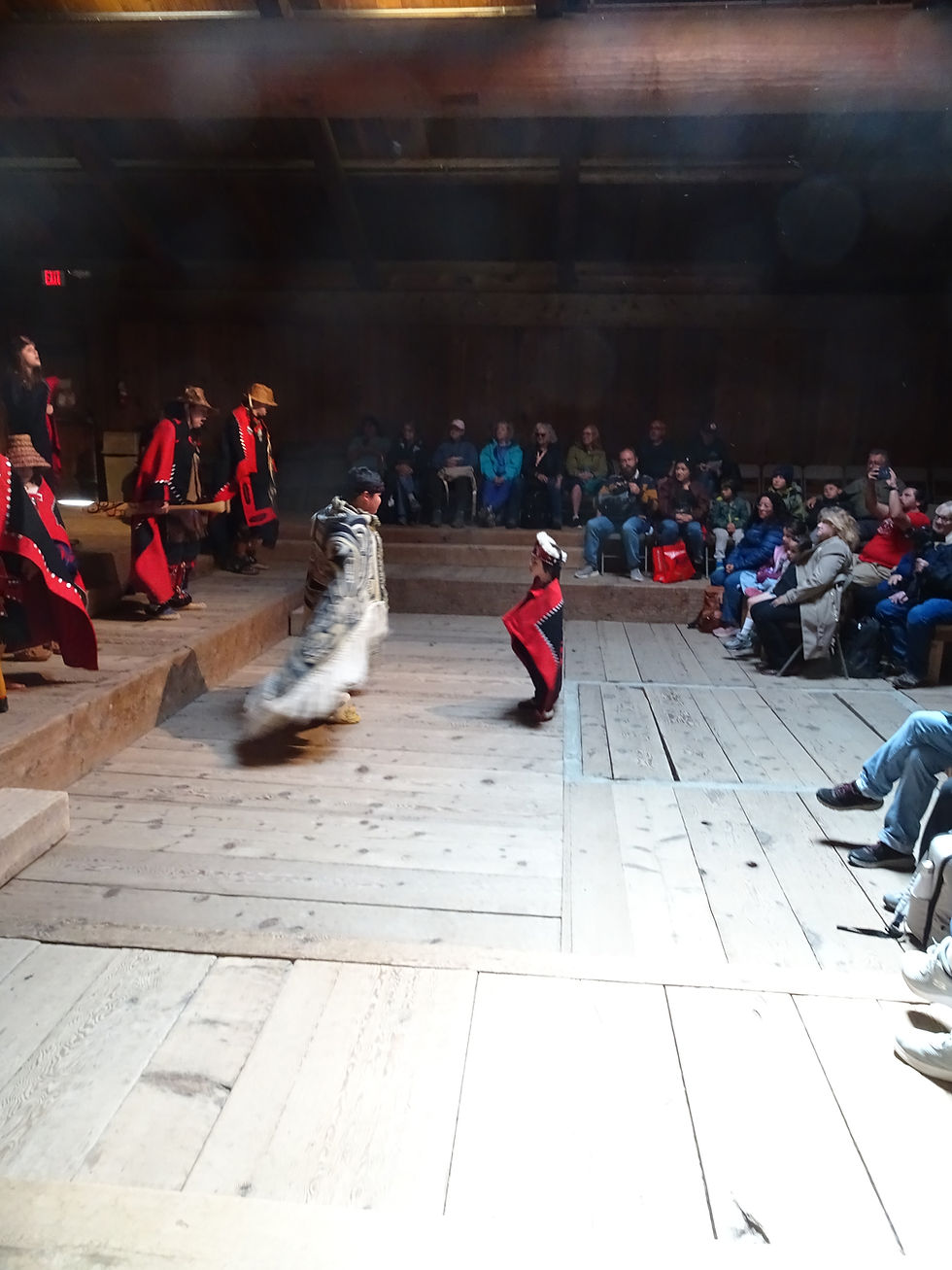
We were welcomed into beautiful lodge constructed of huge cedar posts. Our guide introduced us to the Tlingit (pronounced Klin-kit) people, the indigenous people of the Pacific Northwest. They have a complex society, rooted in maritime trade, sophisticated art, and deep environmental stewardship. The Tlingit belong to one of two moieties – the Eagle and the Raven. They are then divided into numerous clans, then subclans which act similar to family last names. Lineage is traced through the mother - so if your mother was of the beaver clan, so were you. Our guide explained that this was the lodge of the Beaver clan. The 2 totem poles at the front of the lodge identified it as such. I have always admired these totems and it was very interesting to learn that they identify the clan.

We were treated to some of the songs and dances of the people, including a song to welcome us and another to wish us continuing good journeys. Of particular note was the small children who were dancing. Tlingit people are making every effort to preserve their culture and language. Even some of the road signs in the town show Tlingit words with the English words written beneath.
After the dancing we were taken to an area where totems are carved. We were introduced to a master carver and saw some of his work. It takes an experienced carver about a week to complete a foot of the pole, and these poles sell for about $5000 per linear foot. Those displayed in lodges often tell the history of the family. But there are also memory poles, such as 3 that we saw raised in memory of 3 brothers who were lost at sea. Some poles are honor poles to honor a person’s heroic deeds and there are shame poles to document egregious lapses of etiquette.

We were then bussed back to the center of town where we walked a couple of blocks to our next activity – a lumberjack show. This was quite a change from the morning’s programs emphasizing the importance of preserving culture, but the lumberjacks are also an important piece of Alaska’s history.


Around the time of the goldrush (1890’s), lumber was in high demand as the railroad was constructed. They used axes and 2-man crosscut saws to fell large trees which would fall into the ocean where they were then towed to the sawmills built on the shores. Logging remained an enormous industry until the 1970’s, then started to decline until the last mill closed in 1997. The skills needed for this type of work had started to decline until about 20 years ago with the advent of competitive timber sports. The participants we watched in the show were all champion competitors and participated in some of the top events – two-man crosscut saw, springboard, standing block chop and hot saw which uses a highly modified chain saw to rapidly slice wooden discs. We also saw tree climbing. These skills were mixed in with a lot of fun with members of the audience cheering their team and heckling the competitors.
By the time our program had ended, it was time to return to our ship, which then set sell for tomorrow’s destination – the state capital of Juneau.

Comments